Key insights and highlights from Nairobi
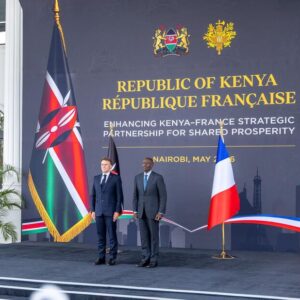
When Emmanuel Macron stood beside William Ruto in Nairobi this week, at the inaugural Africa Forward Summit, the symbolism was impossible to miss: France came to Africa, not the other way around. That detail matters.
For decades, summits involving Africa often took place in Paris, Brussels, London, or Washington — rooms where Africa was discussed, negotiated over, and often spoken for. This time, the world came to Nairobi. And that is why one message echoed far beyond the conference hall:
Africa is moving forward and wants a seat at the table.
The summit, co-hosted by Kenya and France, brought together over 30 African heads of state, business leaders, and international institutions. It was framed not as aid diplomacy, but as strategic partnership in energy, infrastructure, AI, finance, and industrialization.
Why Nairobi mattered more than Paris
There is a reason this summit was not held in Europe.Hosting it in Nairobi signaled that African capitals are no longer peripheral venues. They are becoming centers of global economic negotiation.This was the first Africa–France summit held in an Anglophone African country, a notable departure from France’s traditional focus on Francophone states. Analysts widely interpret this as Paris recalibrating its relationship with a continent where old post-colonial influence is declining. That shift tells a deeper story.Africa is no longer entering partnerships through historical loyalty. It is choosing partners based on leverage, investment, and strategic value.
The old narrative is collapsing
For years, international conversations about Africa were trapped in one frame:
- debt
- aid
- crisis
- conflict
- migration
That story is outdated.
At the summit, the agenda focused on:
| Traditional Narrative | New Reality |
|---|---|
| Africa needs aid | Africa wants investment |
| Africa imports solutions | Africa builds technology |
| Africa follows geopolitics | Africa shapes geopolitics |
| Youth as challenge | Youth as economic engine |
The summit emphasized practical sectors:
- renewable energy
- digital transformation
- AI
- manufacturing
- blue economy
- agricultural innovation
This matters because it moves the discussion from “how to help Africa” to “how to partner with Africa.”
The numbers behind the symbolism
The rhetoric would mean little without money. France announced €23 billion in planned investments tied to summit outcomes, including private-sector commitments and co-investment structures across infrastructure, energy, logistics, and digital systems. Reuters reported that €14 billion would come from French firms and €9 billion from African counterparts.That scale matters because global capital follows confidence. And investors are increasingly recognizing three facts:
1. Africa has the youngest population on earth
The continent’s median age remains under 20 in many countries.
2. Africa has strategic minerals
Critical inputs for EV batteries, solar, and semiconductors are increasingly sourced from African economies.
3. Africa has consumer growth
Urban middle classes continue expanding in key economies such as Kenya, Nigeria, Egypt, and South Africa. This means Africa is not a future market. It is already a strategic market.
My personal observation: Nairobi felt different
Anyone in Nairobi during this summit could feel something unusual. The city did not feel like it was hosting foreign dignitaries. It felt like it was hosting a negotiation of equals. That distinction matters. The conversations in cafés around KICC, among university students, startup founders, and professionals, had a recurring theme: Africa should not just attend global conversations it should define them.That sentiment reflects a generational change. Young Africans increasingly reject being seen only through the lens of aid. They speak the language of venture capital, climate tech, logistics, software, and manufacturing. That confidence is reshaping diplomacy.
Macron’s presence revealed Europe’s urgency
France was not in Nairobi by accident. Europe is in a race. China has invested deeply in infrastructure. Turkey is expanding trade. Gulf states are investing in ports and food systems. Russia has pursued military influence in parts of Africa. France knows its historical relationships alone are no longer enough. Macron’s visit reflected an urgent repositioning: Europe must compete for relevance in Africa. That changes the power equation. Because competition among global powers gives Africa more bargaining strength.And African leaders know it.
A seat at which table?
The phrase sounds rhetorical, but it is concrete. When people say Africa wants a seat at the table, they mean:
Financial governance
African leaders pushed for reform of global lending institutions and debt structures.
Climate financing
Africa contributes little to emissions but faces severe climate impacts.
Trade rules
The continent wants fairer market access and industrial policy space.
AI governance
Africa wants participation in setting ethical and economic standards around emerging technologies.
Security architecture
African countries want partnerships that respect sovereignty. This is about governance, not symbolism.
Why Kenya became the right stage
Kenya has positioned itself well for this role. Its strengths include:
- diplomatic reach in East Africa
- advanced mobile finance ecosystems
- strong startup scene
- renewable energy leadership
- regional transport links
Kenya offers something many countries seek: stability plus ambition. Nairobi was therefore the ideal location to launch a summit centered on innovation rather than dependency. The choice sent a message: Africa’s innovation capitals now belong in the center of global diplomacy.
What the summit did not solve
The event was powerful but not magical. Several realities remain:
Unequal trade terms
Africa still exports raw materials and imports high-value finished products.
Debt pressure
Many countries remain constrained by expensive borrowing.
Fragmentation
The continent still struggles to negotiate as a unified bloc on many strategic issues.
Implementation risk
Summits often generate announcements that fail to materialize.
That is why follow-through matters more than speeches.
The bigger shift: Africa’s confidence
The real story was not Macron. It was Africa’s posture. The summit website carried a powerful phrase: “Africa is not waiting. It is building.” That line captures the mood. Africa is not asking permission anymore. Across sectors:
- founders are building fintech companies
- engineers are building solar systems
- manufacturers are building regional supply chains
- governments are negotiating direct industrial partnerships
This is not theoretical optimism. It is visible on the ground.
What the world should understand now
The global system is changing. Population growth, climate pressure, mineral demand, digital expansion, and trade realignment are pushing Africa toward the center of global strategy.
Ignoring that is a mistake. The Nairobi summit demonstrated that African leaders increasingly recognize their leverage and are willing to use it. That may be the most important takeaway.
Not that France wants Africa. But that Africa can choose France, China, India, Gulf states, or anyone else on its own terms.
Final thought
The image of Macron in Nairobi may become one of those photos historians revisit. Not because of ceremony. Because it may symbolize the moment global diplomacy acknowledged what many Africans already knew: The continent is no longer waiting to be included. It is demanding influence. And rightly so.Because Africa is moving forward and wants a seat at the table.
Share your thoughts
Was the Africa Forward Summit a genuine turning point or another diplomatic headline? Share your perspective in the comments. And if you believe Africa’s voice should shape global decisions, share this article with someone following the continent’s rise.