Eliud Kipchoge and Emmanuel Macron’s Run Through Nairobi When diplomacy laced up running shoes
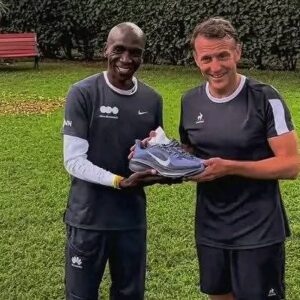
There are summit photos, and then there are images that linger because they tell a deeper story. This one Eliud Kipchoge running beside Emmanuel Macron on a Nairobi morning belongs in the second category.
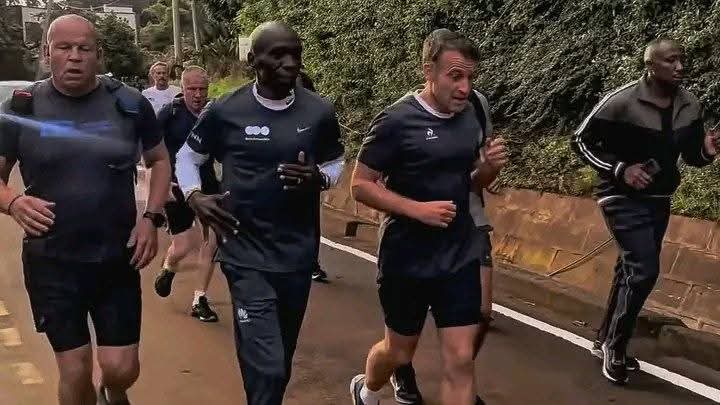
At first glance, it looks simple: two men jogging, one the world’s greatest marathoner, the other one of Europe’s most visible political leaders. But under the surface, it captures the essence of sports and culture how movement, ritual, and shared experience often say more than speeches ever can.
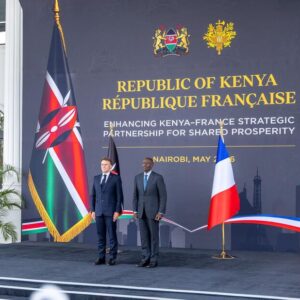
The run happened on the sidelines of the Africa Forward Summit, a summit co-hosted by Kenya and France that brought together over 30 African heads of state, business leaders, and policymakers to discuss innovation, energy, AI, and trade. Before the conference rooms, before the microphones, before the carefully drafted communiqués, there was a run. And that matters.
Why this image resonated far beyond the summit
There is a reason the image spread quickly across global media and Kenyan social timelines: it felt authentic. Kipchoge is not just a sports icon. In Kenya, he represents discipline, humility, and a worldview built around one phrase:
“No human is limited.”
That phrase has crossed athletics and become a philosophy. It appears in classrooms, business seminars, startup circles, and even political speeches. It reflects a belief that limits are mental before they are physical. For Macron, joining Kipchoge was not simply a fitness routine. It was symbolic diplomacy — a quiet but deliberate gesture of respect toward Kenyan identity, where distance running is not merely sport but national heritage.
Sports and culture: Why running is more than exercise in Kenya
To understand this moment, you have to understand what running means here.
In many places, running is a hobby. In Kenya, especially in the Rift Valley, it is intertwined with community, aspiration, and identity. It is cultural capital. Kipchoge’s journey from Kapsisiywa to Olympic legend mirrors the dream of countless young athletes who wake before sunrise to train on dusty roads with the hope of changing their family’s future.
Running in Kenya means:
| Element | Cultural meaning |
|---|---|
| Morning runs | Discipline and routine |
| Group training | Community and collective growth |
| International races | National pride |
| Champions like Kipchoge | Possibility and hope |
That is why seeing Macron run with Kipchoge felt different from a staged photo-op. He was entering a sacred space the ordinary ritual that has produced extraordinary Kenyan champions.
A summit built on policy and an image built on humanity
The Africa Forward Summit focused on economic cooperation between France and Africa, announcing €23 billion in investment commitments and partnerships in clean energy, ports, and AI. But summit declarations are often forgotten. Images are remembered.
That morning jog may become one of the defining visuals of the event because it humanized a political visit often dominated by formal language. It showed something simple: Power can move at the pace of conversation.
What Eliud Kipchoge represented in that moment


Kipchoge was not just accompanying a foreign guest. He represented something larger Africa’s soft power. For decades, African diplomacy has been viewed through minerals, trade, and strategic partnerships. But Africa’s global influence increasingly comes through cultural ambassadors:
- athletes
- musicians
- filmmakers
- tech founders
- creators
Kipchoge belongs to that group. He carries Kenya’s image globally with the same impact as any ambassador. His presence beside Macron suggested something profound: Africa is no longer merely hosting conversations. It is shaping how the world experiences them.
The deeper symbolism: equal ground
France’s relationship with Africa has often been filtered through colonial history and geopolitical tension. Macron’s Nairobi summit was widely interpreted as an effort to reset that relationship, especially with Anglophone Africa.
A run carries symbolism.
There is no podium on a road.
No elevated chair.
No protocol seating.
Just breath, stride, and shared fatigue.
That matters because it creates visual equality. In that frame, Macron was not addressing Africa. He was running beside Africa’s icon. That distinction is subtle but powerful.
Personal reflection: why Nairobi understood this image instantly
What made the photo special was not only who was in it. It was where it happened. Anyone who has lived in Nairobi knows the city transforms in the early morning. The roads are quieter. Joggers reclaim space before traffic and politics take over the day.
So seeing the French president jogging through those streets felt oddly familiar and extraordinary at once.It is the kind of moment that makes ordinary citizens pause at a bus stop and ask:
Did I really just see Macron running with Kipchoge?
That exact reaction appeared across Nairobi social chatter, especially from commuters caught in the traffic caused by the presidential convoy. That grounded the event. It became local, not distant.
Comparison: summit speech vs shared run
| Formal summit | Morning run |
|---|---|
| Scripted | Natural |
| Strategic | Human |
| Closed rooms | Public streets |
| Political language | Body language |
| Policy outcomes | Cultural symbolism |
The lesson?
The run communicated what speeches often struggle to: trust, openness, and mutual respect.
Why “No Human Is Limited” fit this diplomatic moment
Kipchoge’s philosophy carries relevance beyond athletics. It is about possibility. For Africa, that message resonates politically too. The summit itself was framed around a changing relationship not aid, but partnership. Not hierarchy, but shared growth. Kipchoge’s phrase unintentionally echoed that diplomatic theme.
Africa saying:
We are not limited by old narratives.
France saying:
We want a new conversation.
That is why the run mattered. It visually aligned both messages.
Key insights from this moment
1. Sports remains one of the strongest diplomatic languages
Athletes can bridge cultures faster than officials.
2. Kenya’s global image is strongly tied to endurance
Kipchoge symbolizes excellence, resilience, and humility.
3. Visual diplomacy often outlives policy announcements
This photo may be remembered longer than the summit communique.
4. Sports and culture create soft power
Kenya’s marathon legacy shapes how the world sees the country.
Conclusion: a road, a run, a message
There is something poetic about world leaders meeting on a running path.
No podium.
No speechwriter.
No press conference.
Just footsteps.
That morning in Nairobi, Macron may have been attending an international summit, but it was Kipchoge who set the pace literally and symbolically. And perhaps that is the image Africa wanted the world to see:
Not waiting to be spoken for.
Not standing at the sidelines.
Running ahead.
Call to Action
What do you think was this simply a symbolic jog, or a powerful statement about how sports and culture shape diplomacy in Africa today? Share your thoughts, and if you enjoyed this perspective, explore more stories where sport intersects with politics, identity, and global change.